Kubeflow
caution
The integration is experimental.
Overview
The integration takes as input the modelcard document tracked in git and augments it with with experiment information performed in a Kubeflow Pipeline and tracked in MLflow.
The integration relies on the MLflow Tracking Server and the Kubeflow Pipelines to be installed and configured.
Interaction
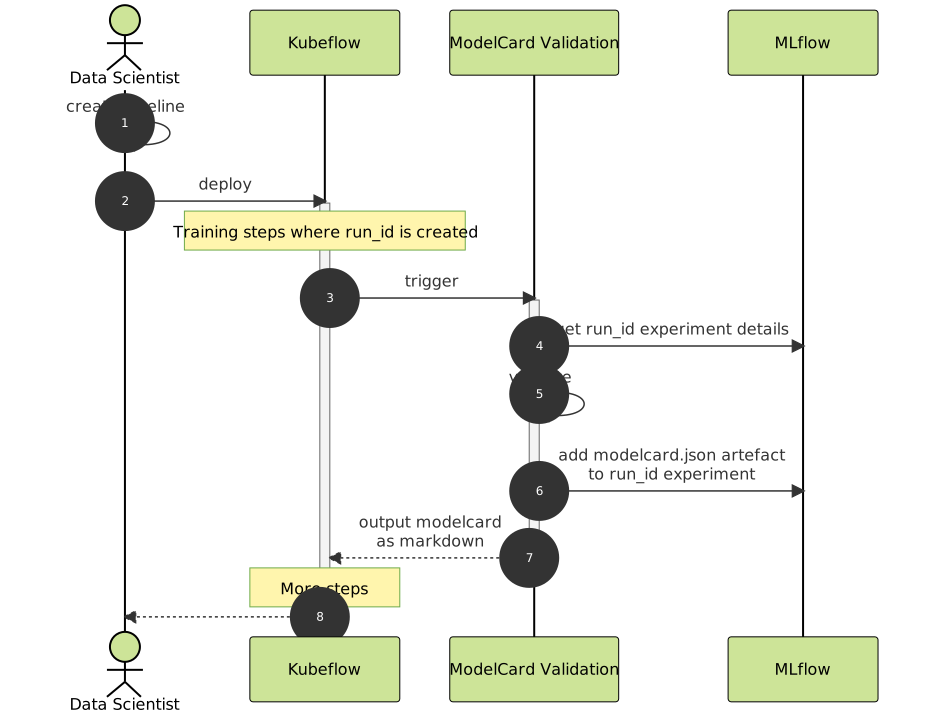
Integration
Modelcard CLI container
The integration is provided as a CLI tool in a container image. The container image is available on GitHub Container Registry:
ghcr.io/compliancepal/mc-kf:latest
Container component
The integration needs Kubeflow Pipelines SDK v2:
pip install --pre kfp~=2.0.0b1
Define the container component as a Python function, using the Pipelines SDK:
from kfp import dsl

@dsl.container_component
def modelcard(run_id: str, tracking_uri: str, modelcard: dsl.InputPath(str)):
    return dsl.ContainerSpec(
        image="ghcr.io/compliancepal/mc-kf:latest",
        command=["modelcard", "kubeflow"],
        args=[
            "--run-id",
            run_id,
            "--tracking-uri",
            tracking_uri,
            "--modelcard",
            modelcard,
        ],
    )
YAML component
Define the Modelcard component in a YAML file:
name: Modelcard

description: Fills the model card template with experiment data from MLflow

inputs:
  - name: tracking_uri
    type: String
    description: MLFlow tracking uri where the training session will be saved
  - name: run-id
    type: String
    descripiton: MLflow experiment run id
  - name: modelcard
    type: LocalPath
    description: Path to the modelcard template file to be expanded with the experiment metadata

implementation:
  container:
    image:
    command:
      [
        'modelcard',
        'kubeflow',
        '--run-id',
        { inputValue: run-id },
        '--tracking-uri',
        { inputValue: tracking_uri },
        '--modelcard',
        { inputPath: modelcard },
      ]